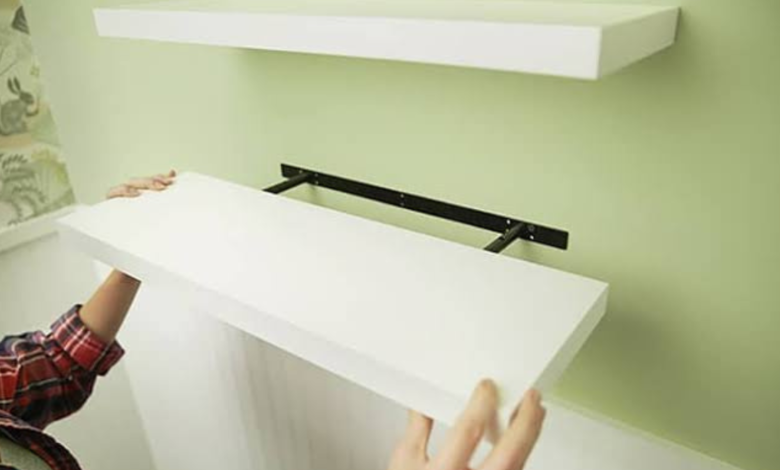
how to hang shelves Hanging shelves can transform any room by adding storage and style. Whether you’re looking to organize your books or display decorative items, knowing how to hang shelves correctly is essential for a sturdy and visually appealing result how to hang shelves.

Essential Tools and Supplies for Hanging Shelves
Before starting your shelf installation, gather the necessary tools and supplies:
- Stud Finder
- Tape Measure
- Hammer
- Level
- Screwdriver or Drill
- Pencil
- Shelf
- Brackets
- 1 1/2″ Screws
Steps on How to Hang Shelves
- Determine Placement: Decide where you want your shelves. Consider the height and spacing based on what you plan to store or display.
- Locate the Studs: Use a stud finder to identify the studs in your wall. Mark these locations with a pencil, as they will provide the best support for your shelves.
- Mark Hardware Location: Position the shelf brackets against the wall at your desired height. Mark the holes of the brackets where you will insert screws. Ensure everything is level for accurate installation.
- Pre-Drill Your Anchor Holes: For better accuracy and to prevent wall damage, pre-drill holes into the wall where you marked the bracket locations. This step is crucial, especially if you’re not drilling into studs.
- Install Brackets: Attach the brackets to the wall using screws. If you’re not attaching to a stud, make sure to use the appropriate wall anchors to ensure shelf stability.
- Hang the Shelf: Once the brackets are secure, place the shelf on top of them. Use a level to ensure the shelf is straight before securing it with any additional screws if necessary.
Tips for Successful Shelf Installation
To enhance your shelf installation, consider these tips:
- Use painter’s tape to outline where the shelf will go. This visual aid helps in determining placement before making any permanent marks.
- For floating shelves, ensure you understand the specific bracket installation methods required. They often require hidden support brackets.
- Consider the weight capacity of shelves when selecting materials and deciding what to store on them. Heavier items require more robust support solutions.
- Maintain shelf stability by regularly checking the screws and brackets to ensure they remain secure over time.
- Explore decorative shelf options to enhance the aesthetic appeal of the installation, integrating style with functionality how to hang shelves.
Frequently Asked Questions
How to hang shelves for beginners?
For beginners, start by gathering the necessary tools, locate studs in the wall, and mark your bracket placements accurately. Pre-drill holes for better precision before installing the brackets and hanging the shelf.
Do shelves need to be on studs?
While it’s not mandatory, securing shelves to studs provides the best support and stability, especially for heavier items. If studs aren’t available, use appropriate wall anchors.
What is the trick to hanging floating shelves?
The key to hanging floating shelves is ensuring that the support brackets are installed level and securely into wall studs or using strong wall anchors. Properly marking the bracket locations will also help achieve a straight installation.
What is the best thing to hang shelves with?
The best options for hanging shelves include sturdy brackets and screws designed for the specific weight capacity of the shelf. For floating shelves, use specialized brackets that can support the shelf’s weight from within.
What are some shelf placement strategies?
When planning shelf placement, consider the height of users, the purpose of the shelf, and the visual balance within the room. Higher shelves work well for decorative items, while lower shelves are better for practical storage.
Are there non-invasive shelf hanging options?
Yes, adhesive strips and hooks can be used for lighter shelves, allowing for a non-invasive installation. However, always check the weight limit to ensure safety.
Learning how to hang shelves correctly can enhance your living space and provide functional storage solutions. With the right tools and techniques, even beginners can achieve professional-looking results.
You May Also Read: why is my cat vomiting